Management Deltas

As heard on

Gilad Naor on podcasts and video.

Conversations about engineering manager and Staff+ behavioral interviews, Amazon's Leadership Principles, and growing an engineering career. Each one has a short written summary below, so you can decide what to watch first.

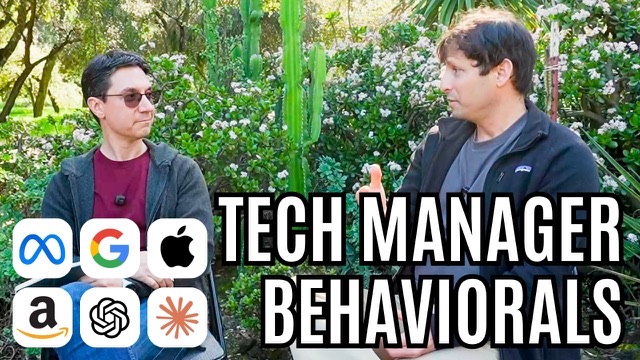
Gilad Naor and Austen McDonald in conversation outdoors

Austen McDonald

Manager Behavioral Interviews at FAANG+

With Austen McDonald, author of Mastering Behavioral Interviews · · 36:05

Gilad joins Austen McDonald to explain how manager behavioral loops differ from IC loops: more rounds, and a broader set of competencies, from executing large projects and influencing without authority to growing the organization. He walks through his two-pass approach to story selection: list every candidate story, come back a day later, ask what made each one hard, and drop the ones without a real challenge. He argues managers need frameworks, not just stories, and shares his own for one-on-ones, the TIP pyramid: trust, then information, then progress. They cover the values questions to prepare for, using a table-of-contents answer to fit long stories into limited time, and adjusting for cross-functional interviewers. His pitfalls for 2026: interviewers now trust follow-up answers more than first answers, so keep first answers short, explain the options you weighed, and bring the real people and places into the story.


Gilad Naor and Austen McDonald talking on Stanford's campus

Austen McDonald

Amazon Behavioral Interviews: What's Different?

With Austen McDonald, author of Mastering Behavioral Interviews · · 23:42

Recorded on Stanford's campus, Gilad and Austen McDonald break down why Amazon's behavioral interviews feel different. The 16 Leadership Principles are the company's operating system, and the hiring manager assigns a few of them to every interviewer, so coding and system design rounds carry behavioral questions too. Gilad recommends reading each principle's full paragraph, not just its title, then mapping your story bank to the principles and looking for moments where two of them pulled against each other, such as Bias for Action and Insist on the Highest Standards. Think out loud about those trade-offs instead of naming the principles. He explains how the Bar Raiser runs the debrief, how a likely no-hire can become a hire, why judgment matters more the more senior you are, what to ask your recruiter on a call, and how Amazon's writing culture means specific numbers and no weasel words.

Gilad Naor on the Coding Chats episode cover

Coding Chats, episode 48

How to grow your software engineering career: startups vs. big tech

With John Crickett · · 48:34

Gilad talks with John Crickett about growing an engineering career at startups and in big tech, drawing on his time at Intel, a decade in renewable energy, then Amazon and Meta. Big tech offers more mentors past the senior level; small startups offer breadth. He describes three chapters of an IC career: craftsmanship, leadership, then specialization. He separates leadership from management, calls management a new career that nobody trains you for, and defines the manager's job as creating positive and sustainable change in the organization's performance. For interviews, he lays out his preparation algorithm: list the areas the company will assess, brainstorm stories, then filter each one by what made it hard, because choosing the right story matters more than how you tell it. He closes with side projects, technical empathy for managers, his rule of talking to two new people at work every week, and owning your career.

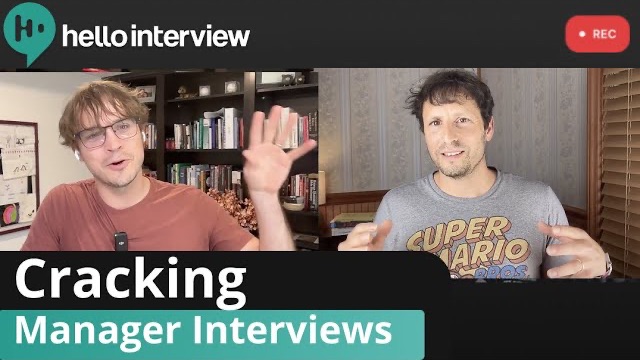
Gilad Naor and the Hello Interview host on a video call

Hello Interview

The Art of People Manager Interviews

· 32:47

Hello Interview's first conversation dedicated to manager interviews. Gilad's core argument: a manager's job is to create positive and sustainable change in the performance of their organization, so strong interview stories show the change you created, not an outcome you happened to witness. A promotion story only lands if the engineer would not have been promoted as quickly without you; a conflict story is stronger when you also fixed the relationship behind it. He shows how to demonstrate empathy through specifics without saying the word, why "what's your approach" questions need a framework tied to real examples, and how a table-of-contents answer lets the interviewer steer. He also covers red flags, such as a low-performer story about a new hire, advice for new managers and for long-tenured ones, and why managers should still prepare for coding and system design, within a time box.

Interview coaching for EMs and Staff+